
Moving through the paralysis of overthinking
“Come on! Stop overthinking it! Go with what feels right.” Quite a few people told me that over the last weeks while I was trying to choose a title for my next book. Yes, the book that tackles how to stop overthinking and take action :).
There is a fine line between considering your options and getting trapped in a thought loop. Did I cross it?
Indeed, I spent hours going back and forth between titles and subtitles, asking you all what you thought. You may have experienced that everyone you consult has good, but different advice. Which to go with? It all felt right.
I know from my days in journalism there’s nothing like a deadline to focus the mind and force a decision, especially when you’re held to high standards. In this case, I wanted to have a presentable version of my overthinking workbook to show at a fair for the entrepreneurs of PWI, the Brussels chapter of the global Professional Women’s Network of which I am a member. For weeks, I had been slaving away until late at night to finalize a good draft of the text.
As the fair approached, I bit the bullet and went with the title that took in both the feedback I received and hit the spot for me.
The day before the fair, I designed a cover. I found a printshop nearby, just before closing time, and was lucky enough that the owner went the extra mile and stayed late to format the cover and print three copies of my book, each with their own cover design.
Baby
Holding your new book for the first time is a special moment. It’s like with a baby: you burst with pride and can’t but love it. But I don’t know about mothers who have triplets. Do they secretly love one more than the others?
I certainly did prefer one of the three designs, but I wanted to let my potential readers make the final decision. After all, they would be the ones buying the book. That’s why I told myself all this was not overthinking it. And I stand by that. Every marketing expert will tell you that you need to A/B test your output to understand what resonates with your audience.
Alright. Perhaps it’s not necessary to A/B/C test.
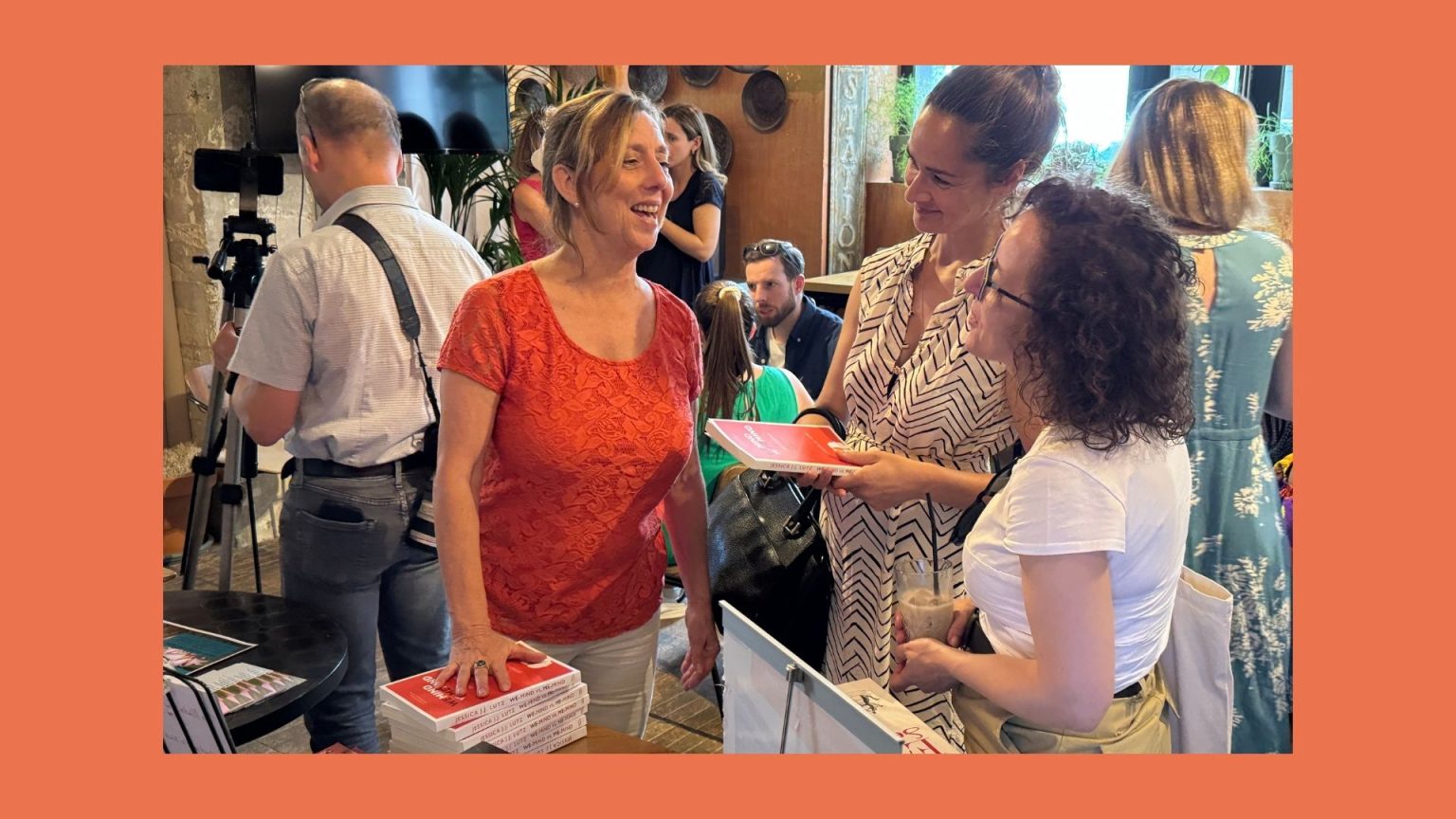
Anyway, the next day, I packed my other books and the three versions of the new one into a shopping trolley, and went to the fair. In my mind I already saw people picking up the book and leafing through it. No, let me be honest, they were devouring it, and preorders were streaming in.
When visitors started arriving, it was time for the big reality check. In the past, I would have dreaded this moment. But I had been truly changed by researching and writing We-Mind vs. Me-Mind and its companion, the workbook that I was now putting to the test. I looked forward to finding out what people thought.
So what happened?
Puzzled
For a start, people I’ve known for several years were surprised to see that this was my seventh book (to be fair, my books are mainly in Dutch and published in the Netherlands. Only my short stories have appeared in American anthologies.) Indeed, it’s a part of me I haven’t put the spotlight on much. That’s another thing that writing the new workbook did: it made me be truer to myself.
And they did pick up the new book. But then…
I was so busy talking about my whole concept of We-Mind vs. Me-Mind and why smart people overthink, that I initially missed how my visitors were looking slightly puzzled. Soon, however, I realized the title I had chosen was too “clever”. People didn’t get what it meant at first glance.
Gradually, the title looked less and less great to me too. It meant I’d have to go back to the drawing board. For some things in life, like a book title, you only have one chance to get it right.
That’s exactly the angst that underlies overthinking: “what if I get it wrong?” High-stakes decisions trigger your connection-oriented We-Mind and self-focused Me-Mind to throw in their full weight in order to protect you. Both Minds have their own reason to fear the consequences of getting it wrong, and their own strategies to keep you from taking that risk.
Albert Einstein said you can’t solve a problem with the same mind that created it. That’s the premise of my book. You won’t find productivity hacks, time management skills or other tactics in it. I go a layer deeper, back to the ‘mind’ that created this issue. Prompts and exercises give you a new perspective that gently shows you how to stop overthinking and take well-considered action.
I’ve taken my own medicine. The book will be out in a couple of months. As for the title, I’ve had to let go of my clever pun and the word “stalling” which many non-native English speakers aren’t familiar with. So here’s where I am now:
Stop Overthinking. Take Action. No More Regrets. – A We-mind vs. Me-Mind Workbook
→ Let me know what you think. I’m curious!
→ If you’re interested in being an early reader and helping me shape the final text, let me know. I need you, and will thank you in the book.
→ And if you haven’t taken the assessment yet to find out whether you lead with your Me-Mind or We-Mind, you can do so here.